Why This Matters: Health, Inequality, and the Public Health Crisis
Health consequences
Because UPFs tend to be energy-dense, high-calorie and low-nutrient, over-relying on them pushes more people toward obesity and related diseases. In the long run, that means more cases of heart disease, diabetes, some cancers and a heavier burden on individuals, families, and health services.
Social inequality and access
UPF consumption is often higher among lower income households. This raises ethical concerns: healthier choices ,fresh fruit, vegetables, whole grains. Often cost more in time, money or both. For many, cheap calories come from UPFs because they’re cheap, widely available and heavily marketed.
That means poor diet and its health consequences disproportionately affect those least able to afford alternatives worsening existing social inequalities.
Public health & NHS burden
With a health crisis tied to diet, the consequences ripple outward: increased pressure on the NHS, higher rates of chronic disease, reduced life expectancy, more suffering. A population’s diet isn’t just a private matter it’s a societal one.
What are the government doing?
The dietary guidelines promoted by the Scientific Advisory Committee on Nutrition via the Eatwell Guide, encourage diets lower in saturated fat, salt and free sugars, and rich in fruit, vegetables, wholegrain and fibre. These guidelines discourage high reliance on foods that also happen to be ultra-processed.
However and this is the key problem. UPFs are not condemned or banned. As of now, there is no agreed definition of UPFs in UK government dietary policy.
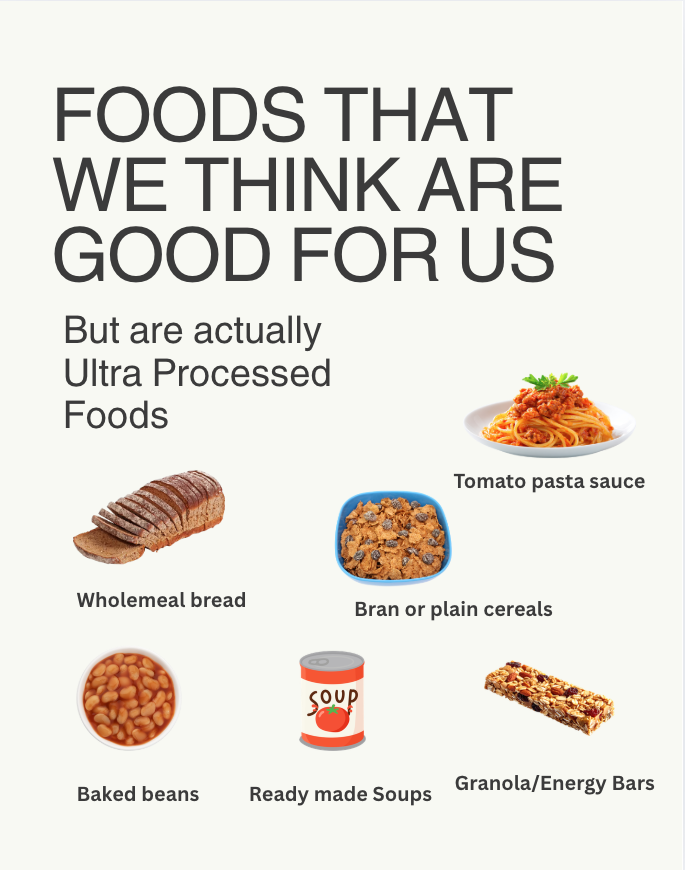
That means many ultra-processed items still slip through “healthier option” loopholes. Crisps, cereal bars, some packaged breads, convenience foods, etc even if they carry some nutritional label or appear relatively “harmless.” Many of these remain heavily marketed, cheaply priced, and widely consumed.
A recent government push where retailers were advised to promote minimally processed, nutritious foods by offering discounts, loyalty points or multi-buy deals has been dropped. This followed intense lobbying by major food & drink corporations, firms behind many of the very UPFs under scrutiny.
Because UPFs make up such a large share of the average UK diet, and because policies to curb them remain weak and easily undermined, the UK is at a real risk of being and perhaps already being one of the worst high-income countries in terms of diet-related health burden.
That is why it is so important to grab the nutritional information you can on how and what you should be eating from your future health.
This is where The Atomic Wellness Company come in. We are all about making the knowledge available to you and support you on a healthier lower processed food cycle.
Hope to see you at our free Real Food Reset events, funded by the National Lottery Community Fund.